Mobility Routines to Move Better Every Day
Build resilient, pain‑free movement with quick, proven mobility routines. Try AM primers, 1‑minute breaks, and evening resets to feel better daily.
Foundations of Daily Mobility Mobility is the ability to move a joint through its usable range with strength, coordination, and awareness. Unlike passive flexibility, mobility blends stability and control, so you can access positions confidently in sport and daily life. Think of it as grease for the body's moving parts: frequent, gentle motion circulates fluid, nourishes cartilage, and tells the nervous system you are safe to move. Prioritize quality over intensity by exploring pain-free ranges and slowing down the transitions. Build sessions around simple patterns: neck nods and turns, thoracic rotations, scapular circles, hip hinges, 90/90 transitions, and ankle rocks. Use breath as your metronome—smooth inhales to create space, long exhales to relax tone. Minimal tools help, but a wall, floor, and towel are plenty. In the sports and fitness context, daily mobility supports better mechanics, reduces stiffness, and prepares you for skill work. The goal is consistency: small, frequent check-ins that teach your body to move well, every day.
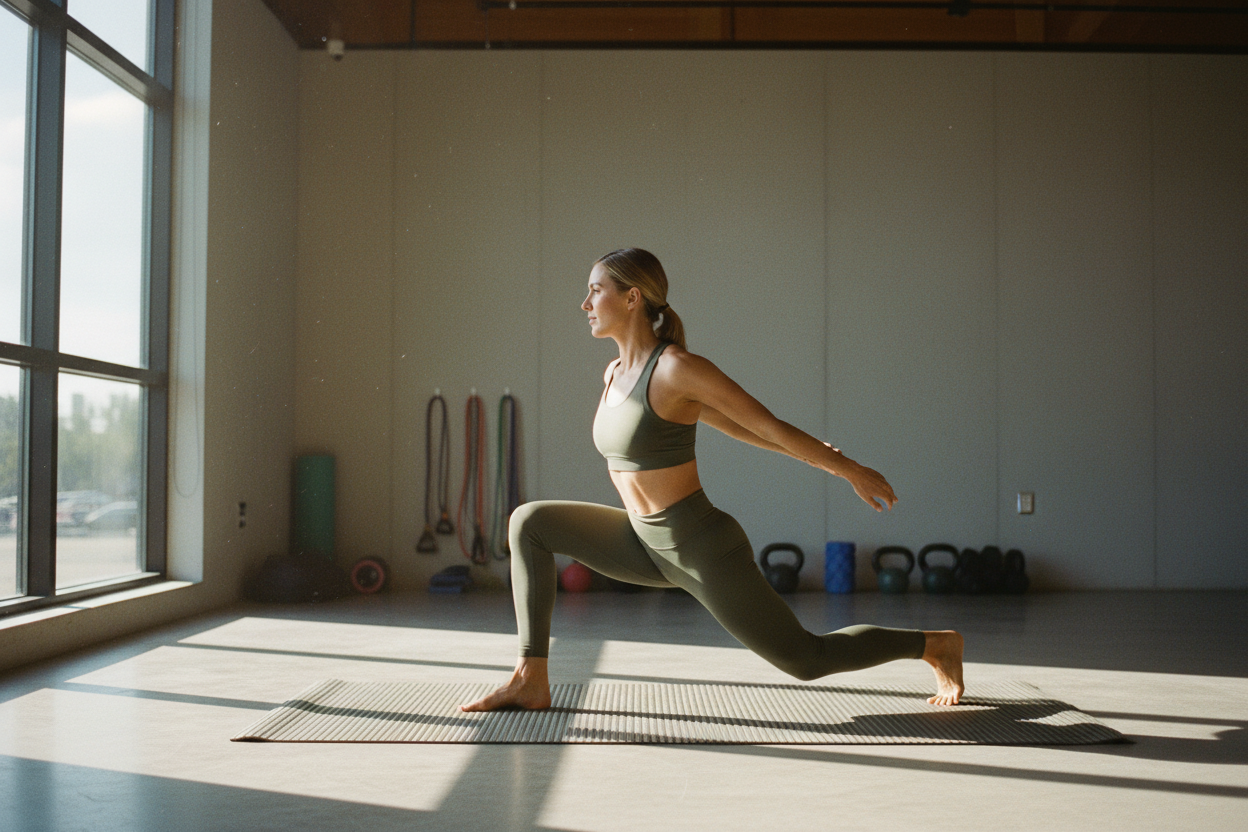
Morning Reset for Fluid Joints Mornings are perfect for a gentle reset that wakes tissues without forcing range. Begin on the floor with slow diaphragmatic breathing, expanding the ribs in all directions. Flow into cat-cow to mobilize the spine, then explore segmental flexion, rolling up one vertebra at a time. Add neck CARs to map your available rotation, and easy scapular slides to switch on the upper back. Open the hips with a 90/90 sit, rocking forward and back to invite space, and finish with ankle pumps and toe spreads to prime gait mechanics. Stand tall and practice a balanced foot tripod—big toe, little toe, and heel sharing load—then take a few light, springy steps. Keep intensity low and curiosity high; let breath guide pace and range. This sequence sets a calm, ready tone for the day, improves posture, and builds the habit of checking in with how you move before life gets busy.
Desk Break Flow to Undo Sitting Long sitting compresses hips, stiffens the thoracic spine, and quiets the glutes. Counter it with quick micro-breaks that stack effortlessly into your day. Stand and reach overhead with a gentle side bend, breathing into the ribs. Lean against your chair back for thoracic extension, opening the chest while keeping the neck long. Add scapular push-ups on the desk to reawaken shoulder control, then perform wrist CARs and finger extensions to balance keyboard time. Step into a staggered stance for a hip flexor opener, lightly squeezing the back glute, and alternate with hamstring flossing by softening and re-straightening the knee. Finish with standing hip circles and a few glute squeezes to reset alignment. Anchor these breaks to routine cues—finishing a message, refilling water, or before a meeting—so they happen automatically. Over time, you will notice easier posture, clearer breathing, and less lower-back tension, raising your energy for both training and everyday movement.
Pre-Workout Primer for Safer Training A smart warm-up turns on the nervous system, rehearses patterns, and reduces the risk of tweaks. Use a RAMP approach: Raise temperature with brisk marching or light skipping in place; Activate key tissues with glute bridges, banded lateral walks, and scapular retractions; Mobilize with world's greatest stretch, lunge with rotation, ankle dorsiflexion rocks, and shoulder openers using a band or towel; Potentiate with crisp, low-volume plyometrics like pogo hops or medicine ball taps. Focus on alignment cues—tall spine, ribs stacked over pelvis, knees tracking over toes, and a lightly braced core. Keep reps modest and stop while you still feel sharp; the goal is readiness, not fatigue. This primer improves movement quality, raises power output, and builds repeatable rituals. Whether you lift, run, or play, a targeted warm-up ensures you access clean ranges of motion and stable positions before load and speed amplify demands.
Evening Downshift to Recover Recovery is a skill, and evening mobility invites the body into a calm, repair-friendly state. Start with slow, nasal breathing and extended exhales to downshift the nervous system. Choose longer, unhurried holds that feel supportive: a gentle hip flexor stretch, hamstring opener with a strap or towel, and calf lengthening against a wall. Add open-book thoracic rotations and a side-bending child's pose to release the upper back and lats. Explore 90/90 hip switches and relaxed pelvic tilts to soothe the lower back. If you like soft-tissue work, lightly foam roll quads, calves, and lats, keeping pressure comfortable and breaths steady. Finish with legs elevated or a supported forward fold to signal quiet. This ritual complements sports and fitness training by restoring tissue glide, easing residual tension, and preparing you for quality sleep. The key is a gentle, curious approach: no forcing ranges, just consistent, mindful time in positions that feel nourishing.
Make It Stick: Habits and Progress Consistency beats intensity. Make mobility a keystone habit by pairing it with daily anchors—after brushing teeth, before coffee, or post-workout. Track simple test–retest markers like an overhead reach, a smooth deep squat, or a toe touch to see real changes and stay motivated. Progress by adjusting range, tempo, breathing, and support rather than chasing extreme stretches. Regress whenever needed; the best plan is the one you will repeat tomorrow. Blend play and variety—crawling, rolling, and multiplanar flows keep the brain engaged and joints honest. Safety first: move within pain-free ranges, respect sharp or nervy sensations, and give your body time to adapt. Over weeks, you will notice smoother transitions, better coordination, and more confidence under load. Mobility is not an add-on; it is the silent partner that makes training enjoyable and daily tasks effortless. Start small, stay curious, and let better movement compound.